Requizy: Artisanal Handwriting Font
There I was, staring at a blank brand board, trying to find the right visual voice for a new artisanal café. The client wanted something warm, inviting, and slightly unconventional. I had tried several script fonts, but none quite captured that handcrafted feel without looking too busy or inconsistent. Then I stumbled upon Requizy.
A Unique Handwritten Vibe
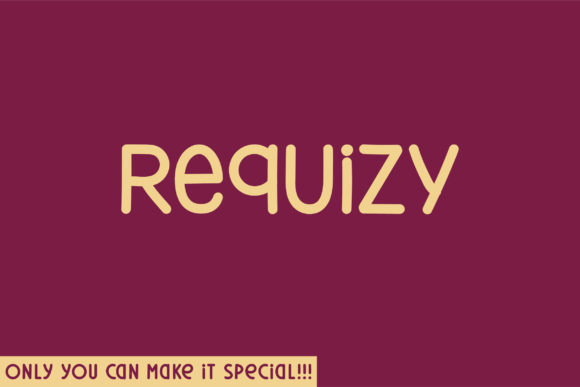
Requizy is a pure artisanal handwriting font that feels like it was written by hand, not designed on a computer. Every character has its own subtle variation, but there’s a consistency in the way each stroke flows. It doesn’t feel forced or overly stylized—it’s organic, natural, and just a little bit wild. The lack of modified nodes in every character’s indentation gives it a raw, authentic look that’s hard to replicate with other fonts.
It has a personality that’s both friendly and professional. Think of it as the handwritten note you’d get from a trusted local baker—personal, reliable, and full of character. This makes it perfect for brands that want to communicate warmth and authenticity without sacrificing polish.
Testing Requizy in Real Projects
I started by testing it on a logo concept. The fluidity of the letters worked well for a simple logotype, especially when paired with a clean sans serif for balance. On a packaging mockup, Requizy added a tactile quality that made the product feel more handmade and approachable. It didn’t overpower the design, but it definitely caught the eye.
On a business card, it looked elegant and legible, even at smaller sizes. I used it for a website header and found that it brought a sense of movement and energy to the page. Social media graphics also benefited from its expressive style, making posts feel more personal and engaging.
When Requizy Shines
Requizy excels as a display font or headline font. It works best for short phrases, logos, and branding elements where its unique characteristics can be appreciated without overwhelming the viewer. It’s ideal for creative studios, boutique brands, handmade shops, and any project that wants to emphasize a human touch.
Its strength lies in its ability to add a sense of individuality to a design. Whether it’s a café sign, a product label, or an Instagram post, Requizy brings a level of charm that’s difficult to achieve with more rigid typefaces.
Limitations and Considerations
That said, Requizy isn’t suited for every project. It’s not the best choice for long body text or formal corporate use. At small sizes, some characters can become less readable, especially in low-contrast environments. It also requires careful pairing with other fonts to avoid clashing or diluting its impact.
If you’re planning to use it in a commercial setting, make sure to check the licensing terms. Requizy is a premium font, and proper usage rights are essential for client work, print-on-demand products, and digital assets.
Pairing and Practical Tips
When pairing Requizy, consider balancing it with a serif or sans serif font. A classic serif like Caslon or a modern sans like Montserrat can provide contrast while letting Requizy stand out. For a more cohesive look, pair it with another script font that complements its flow and structure.
Before finalizing any project, test Requizy in different contexts. Try it on a shop sign, a product mockup, or a printed card to see how it holds up under real-world conditions. Pay attention to how it interacts with other design elements and whether it supports the overall brand message.
Requizy is part of the Script Amp collection, which means it’s built for designers who value creativity and authenticity. Its multilingual support and webfont availability make it versatile for global projects and digital platforms.
Final Thoughts
Requizy is more than just a font—it’s a design tool that adds a human element to any project. Whether you’re working on a café identity, a skincare brand, or a handmade shop, it offers a fresh and authentic alternative to standard script fonts. Its organic style, combined with its versatility, makes it a valuable addition to any designer’s toolkit.